

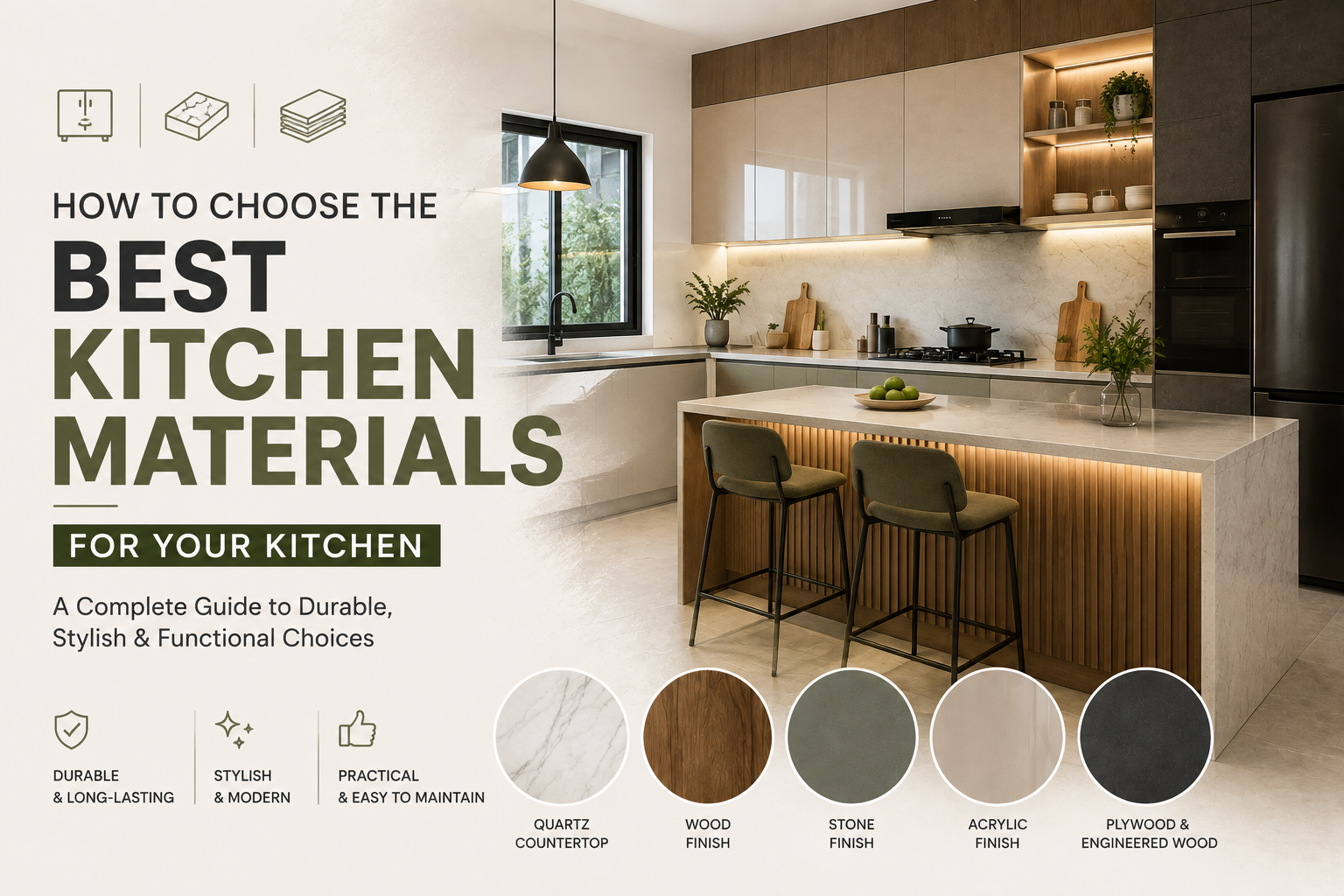
Designing a kitchen is about much more than choosing beautiful colours and layouts. The kitchen materials you select play an important role in determining the durability, functionality, maintenance, and overall appearance of the space.
From cabinets and countertops to backsplashes and hardware, every material needs to withstand the demands of everyday cooking while complementing your interior style. With so many options available today, knowing which materials are best suited for your kitchen can make the design process much easier.
In this guide, we’ll explore the most popular kitchen materials and the key factors to consider before making your choice.
Why Choosing the Right Kitchen Materials Matters
The kitchen is exposed to moisture, heat, stains, grease, and frequent use. Choosing the wrong materials can result in surfaces that are difficult to maintain or deteriorate prematurely.
The right materials should offer a balance of:
- Durability
- Moisture resistance
- Easy maintenance
- Aesthetic appeal
- Functionality
- Long-term value
- Suitability for your budget
Instead of selecting materials based solely on appearance, consider how they will perform in your daily kitchen environment.
1. Choose the Right Material for Kitchen Cabinets
Kitchen cabinets occupy a significant portion of the visual space, making the choice of cabinet material particularly important.
Plywood
Plywood is a popular choice for kitchen cabinetry because of its strength and dimensional stability. Good-quality plywood can be suitable for areas exposed to regular use and moisture when properly selected and finished.
It can be paired with different surface finishes, including laminate, acrylic, veneer, and paint.
MDF and HDF
MDF and HDF are engineered wood products that provide a smooth and consistent surface. They are often used for shutters and decorative applications, particularly where a smooth painted or routed finish is required.
However, the suitability of these materials depends on the specific grade, construction, and location within the kitchen.
Particle Board
Particle board is another engineered wood option and is generally more budget-friendly. It can work well in suitable applications when properly manufactured and protected from moisture.
When selecting kitchen materials, don’t just compare the names of materials. Consider the quality, thickness, grade, construction, and manufacturer specifications.
2. Select the Right Kitchen Laminate
Kitchen laminate is one of the most widely used finishes for kitchen cabinets.
It is available in a wide variety of colours, textures, and patterns, making it easy to customise the appearance of your kitchen.
Popular options include:
- Matte laminates
- High-gloss laminates
- Wood-finish laminates
- Textured laminates
- Metallic laminates
- Stone-finish laminates
- Solid-colour laminates
Matte Laminates
Matte laminates provide a sophisticated and understated appearance. They are particularly suitable for contemporary and minimalist kitchens.
Glossy Laminates
Glossy finishes reflect light and can make a kitchen appear brighter. They can work especially well in compact kitchens, although fingerprints and smudges may be more visible.
Wood-Finish Laminates
Wood-look laminates introduce warmth and natural character while offering a wide range of colours and patterns.
For a premium-looking kitchen, wood finishes can be combined with neutral or stone-inspired surfaces.
3. Consider Acrylic Finishes
Acrylic is another popular option for modern kitchen cabinets.
Acrylic finishes are known for their smooth, reflective appearance and can create a sleek, contemporary look.
They are available in a wide range of colours and can work particularly well in modern kitchens where a high-end appearance is desired.
However, acrylic surfaces can show fingerprints and scratches more readily depending on the product and finish, so maintenance requirements should be considered before choosing them.
4. Choose the Right Countertop Material
The countertop is one of the most heavily used surfaces in the kitchen. It needs to withstand food preparation, spills, heat, and regular cleaning.
Quartz
Quartz is a popular choice for contemporary kitchens because of its consistent appearance and practical performance.
It is available in a wide variety of colours and patterns, including designs inspired by natural marble and stone.
Granite
Granite offers a natural stone appearance with unique patterns and variations. It has traditionally been a popular countertop choice because of its durability.
Each slab can have a different pattern, making granite suitable for homeowners who prefer natural materials.
Marble
Marble creates an elegant and luxurious appearance. Its distinctive veining makes it a popular choice for premium kitchen interiors.
However, marble requires more care than some other countertop options and can be susceptible to staining and etching. Proper sealing and maintenance are important.
Solid Surface
Solid-surface materials can provide a seamless appearance and are available in many colours and patterns. Depending on the product, they can also allow integrated sinks and other design details.
5. Choose a Practical Backsplash Material
A backsplash protects the wall behind your cooking and preparation areas while also providing an opportunity to introduce colour and texture.
Popular backsplash materials include:
- Ceramic tiles
- Porcelain tiles
- Natural stone
- Glass
- Quartz slabs
- Marble
- Large-format tiles
For a minimalist kitchen, a simple backsplash that blends with the countertop can create a seamless appearance.
For a more decorative kitchen, patterned tiles or contrasting materials can become a visual focal point.
6. Don’t Forget the Flooring
Kitchen flooring needs to withstand foot traffic, spills, stains, and regular cleaning.
Popular kitchen flooring options include:
- Porcelain tiles
- Ceramic tiles
- Natural stone
- Vinyl
- Engineered wood
- Large-format tiles
Porcelain tiles are particularly popular because they are available in numerous colours and textures and can replicate materials such as wood and stone.
When selecting flooring, consider slip resistance, maintenance, durability, and how well it complements the cabinetry.
7. Select Materials According to Your Lifestyle
The best kitchen materials depend on how you use your kitchen.
If you cook frequently, prioritise materials that are durable, easy to clean, and resistant to everyday wear.
If your kitchen is mainly used for light cooking, you may have more flexibility to prioritise decorative finishes.
For families with children, practical and easy-to-maintain surfaces can be particularly useful.
Your lifestyle should influence your material selection just as much as your design preferences.
8. Think About Maintenance
A beautiful kitchen can become difficult to live with if every surface requires intensive maintenance.
Before selecting a material, ask:
- Is it easy to clean?
- Does it show fingerprints easily?
- Is it resistant to stains?
- Does it require regular sealing?
- Can it withstand frequent cleaning?
- How does it respond to moisture?
- Are repairs or replacements easily available?
For busy households, low-maintenance kitchen materials can provide significantly better long-term convenience.
9. Consider Your Budget
Kitchen materials are available at different price points, so establish your budget before finalising the design.
Instead of spending the same amount on every element, prioritise areas that receive the most use.
For example, you may choose to invest more in:
- Cabinet construction
- Countertops
- Hardware
- Sink and faucet
- Frequently used storage systems
You can then select more budget-friendly finishes for areas that are less exposed to daily wear.
The goal should be to create the right balance between quality, appearance, performance, and cost.
10. Match Materials With Your Interior Style
Your kitchen materials should work together as part of one cohesive design.
Modern Kitchen
Consider:
- Matte laminates
- Acrylic finishes
- Quartz countertops
- Minimal hardware
- Large-format tiles
Contemporary Kitchen
Consider:
- Wood-finish laminates
- Neutral colours
- Stone-inspired surfaces
- Mixed textures
- Warm lighting
Luxury Kitchen
Consider:
- Premium veneers
- Marble or marble-look surfaces
- High-quality hardware
- Metallic accents
- Statement lighting
Minimalist Kitchen
Consider:
- Simple solid colours
- Handleless cabinets
- Matte finishes
- Minimal patterns
- Neutral countertops
Popular Kitchen Material Combinations
Combining different materials can create a more sophisticated kitchen design.
Wood + White
A classic combination that adds warmth while maintaining a clean appearance.
Grey + Wood
A contemporary combination that works well in modern homes.
White + Marble
A timeless combination that creates a bright and elegant kitchen.
Green + Wood
A natural combination that brings warmth and personality to the space.
Black + Wood
A dramatic combination that can create a luxurious and modern atmosphere.
Common Mistakes to Avoid
When selecting kitchen materials, avoid making decisions based solely on trends.
Choosing Appearance Over Performance
A material may look beautiful but may not be suitable for heavy kitchen use.
Ignoring Moisture
Kitchen cabinets and surfaces are exposed to water and humidity. Material selection and proper installation are essential.
Using Too Many Finishes
Combining too many colours, textures, and patterns can make the kitchen look cluttered.
Not Checking Physical Samples
Colours and textures can appear different on screens. Always examine physical samples under your kitchen’s actual lighting conditions.
Choosing Materials Independently
Cabinet finishes, countertops, backsplash, flooring, and hardware should be considered together to achieve a cohesive result.
How to Choose the Best Kitchen Materials
Before finalising your kitchen materials, follow this simple checklist:
1. Define your budget
Know how much you want to invest in the kitchen.
2. Understand your lifestyle
Consider how frequently you cook and how much maintenance you are willing to do.
3. Select the cabinet construction
Choose a suitable board or core material based on the application.
4. Choose the surface finish
Compare laminates, acrylic, veneer, paint, and other options.
5. Select the countertop
Consider durability, maintenance, appearance, and budget.
6. Coordinate the backsplash and flooring
Make sure the materials complement the cabinets and countertop.
7. Check samples in real lighting
This helps you see the actual colours and textures before making a final decision.
8. Prioritise quality installation
Even high-quality materials can perform poorly when installation and detailing are inadequate.
Final Thoughts
Choosing the right kitchen materials is an important part of creating a kitchen that is beautiful, functional, and built for everyday living. From plywood and laminates to acrylic, quartz, granite, marble, and tiles, each material has its own advantages and considerations.
The best choice isn’t necessarily the most expensive material. It is the combination that fits your lifestyle, design preferences, maintenance expectations, and budget.
If you’re planning a new kitchen or renovating an existing one, an experienced interior designer can help you compare materials, coordinate colours and finishes, and create a kitchen that looks beautiful while remaining practical for years to come.